



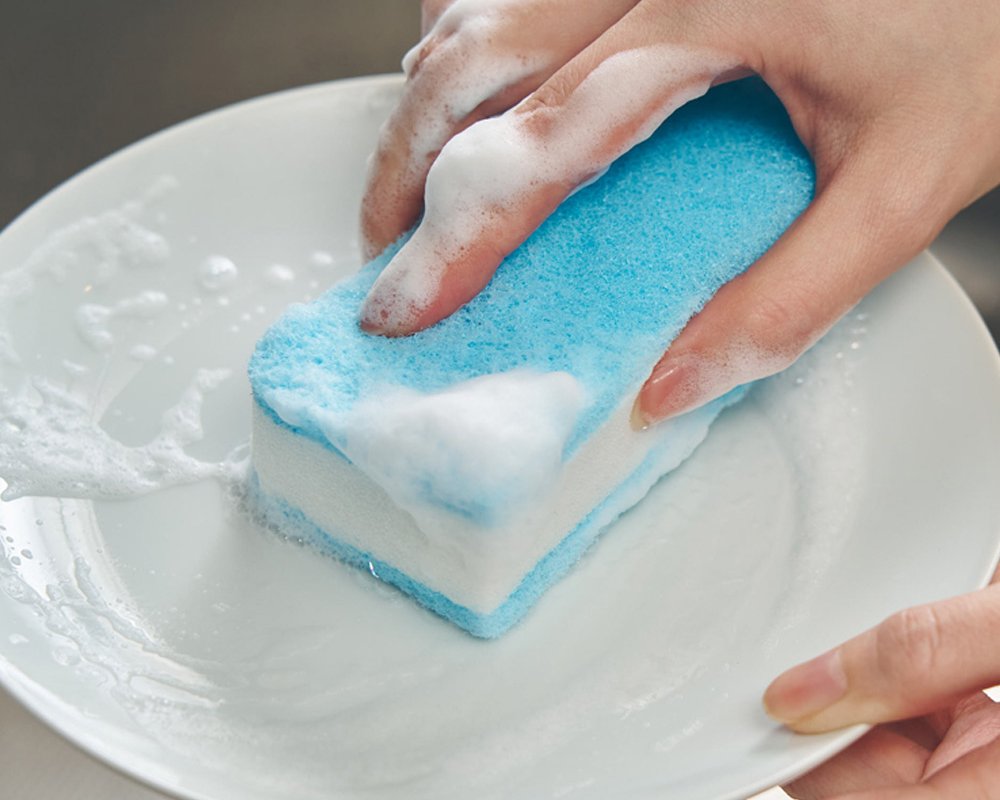
A good kitchen sponge cleans faster, lasts longer and stays more hygienic than a cheap one. Here is how to pick and use a Japanese kitchen sponge well.
Choose the right type
- Layered (soft + scrubbing) sponges handle everyday dishes — a soft side for glassware, a firmer side for pots.
- Durable high-density sponges keep their shape and resist falling apart, so they last much longer.
- Non-scratch fibre protects coated pans and delicate surfaces.
Use less detergent
A dense Japanese sponge lathers efficiently, so a small drop of dish soap goes a long way. Squeeze, do not soak — too much water dilutes the foam.
Keep it hygienic
- Rinse and wring the sponge after every use.
- Stand it on its edge or in a holder so air reaches all sides.
- Once a week, sanitise it: soak in diluted bleach, or microwave it damp for one minute (non-metallic sponges only).
- Replace it when it loses firmness or starts to smell.
Match the sponge to the task
Keep separate sponges for dishes and for surfaces to avoid cross-contamination. Colour-coding makes this effortless.
Aisen makes durable, made-in-Japan kitchen sponges and cloths. See the kitchen range.