


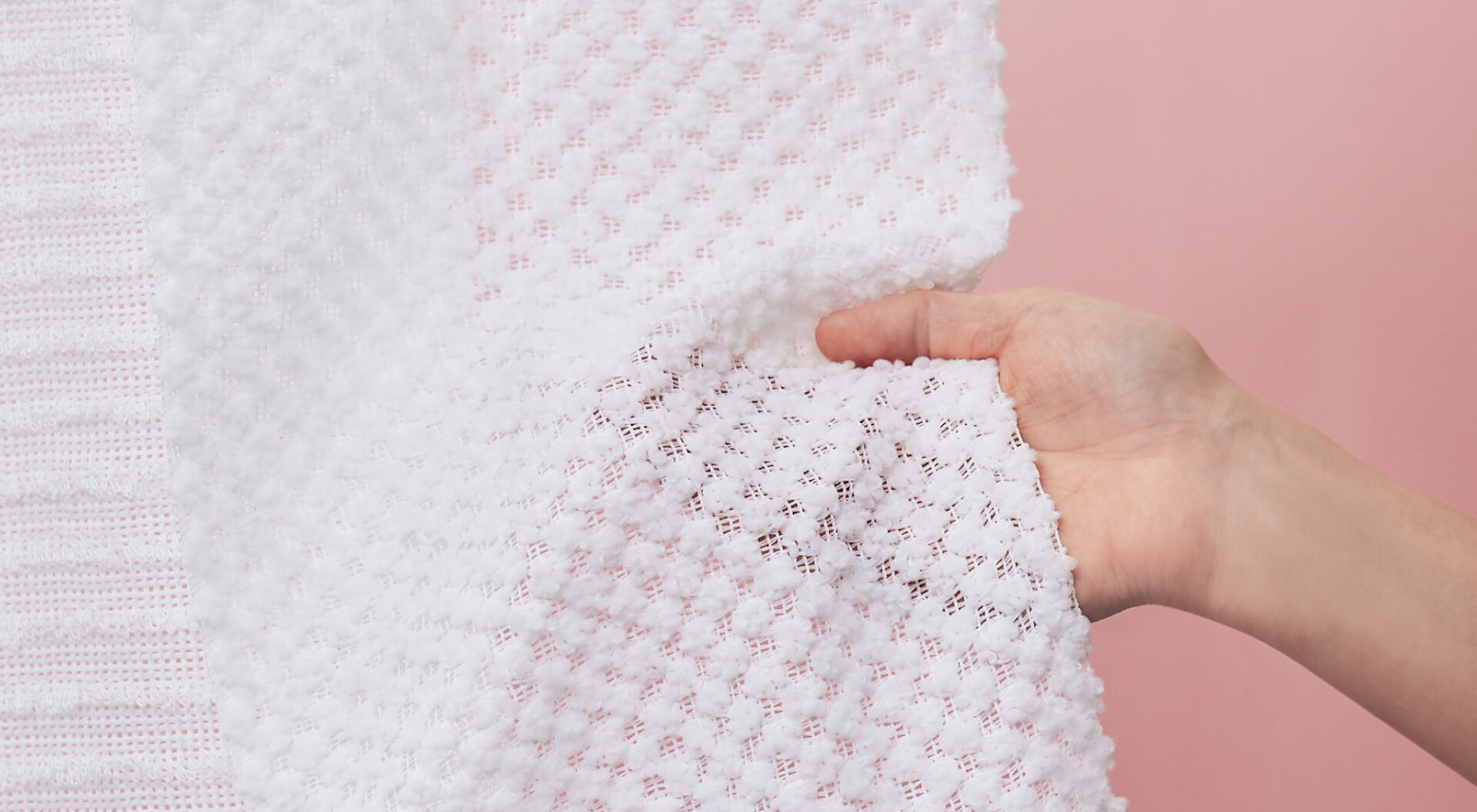
A Japanese body towel looks simple — a length of textured woven fabric — yet the way it lathers, exfoliates and lasts is decided long before it reaches the shower. It is decided at the loom, the dye vat and the cutting bench. For more than forty years, Aisen Industrial has manufactured body towels, sponges and everyday bath goods in Wakayama, Japan, and shipped them to retailers and brands across six continents. Here is how a Japanese body towel is made — and how we can make yours.
Why the body towel is a “made in Japan” product
Japan effectively defined the textured exfoliating body towel, and overseas shoppers still associate it with consistent weave quality, skin-safe finishing and a credible origin story for beauty and bath retail. The performance your customers actually feel — a dense lather from only a little soap, a brisk exfoliating touch, fast drying, and a towel that holds its texture wash after wash — is an engineering outcome of fibre, weave and finishing. It is not a claim printed on a sleeve.
Because Aisen is a manufacturer rather than a trading desk, we control the yarn, the weave and the finishing in-house. That matters for a private-label program: the specification approved at sample stage is what arrives in your warehouse, batch after batch. If you are new to the category, our explainer on what a Japanese body towel is is a useful starting point.
Inside the make: from yarn to finished towel
A Japanese body towel passes through five controlled steps. Each one leaves a fingerprint on how the finished product performs, which is why we keep all of them under one roof.
01Material and yarn selection
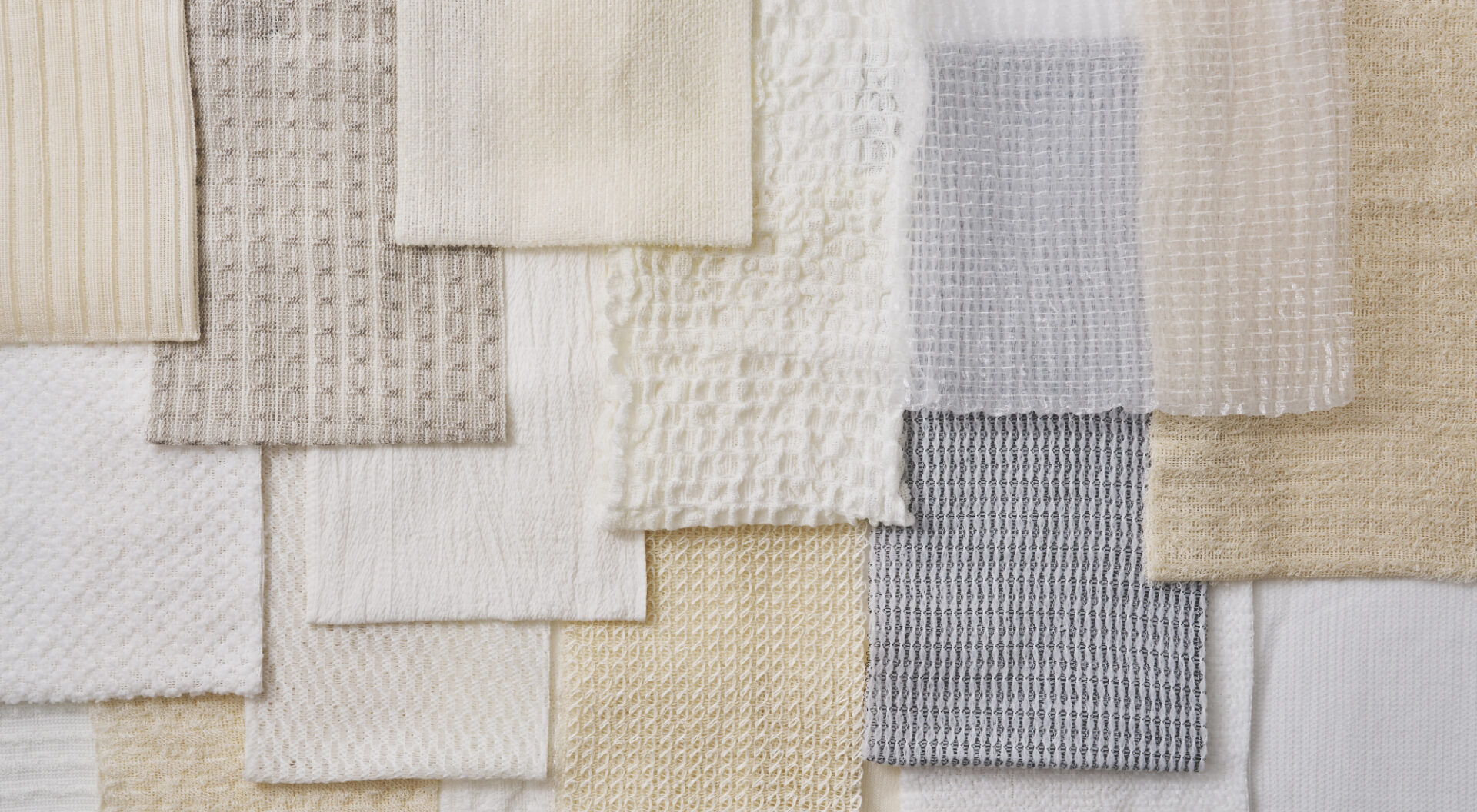
Texture, lather and gentleness all start with the fibre. We work across nylon and other synthetics for deep exfoliation; cellulose and bamboo rayon for softness and biodegradability; PVA for a smooth, highly water-holding hand; polyurethane and custom mesh for lather; and konjac and sericin (silk-protein) finishes for skincare-led, sensitive-skin lines. Yarn thickness, twist and blend are then chosen against your brief: how abrasive, how soft, how much foam, how quickly it should dry. Biomass-labelled and plant-derived yarns are available for sustainability-led ranges.
02Weaving the texture
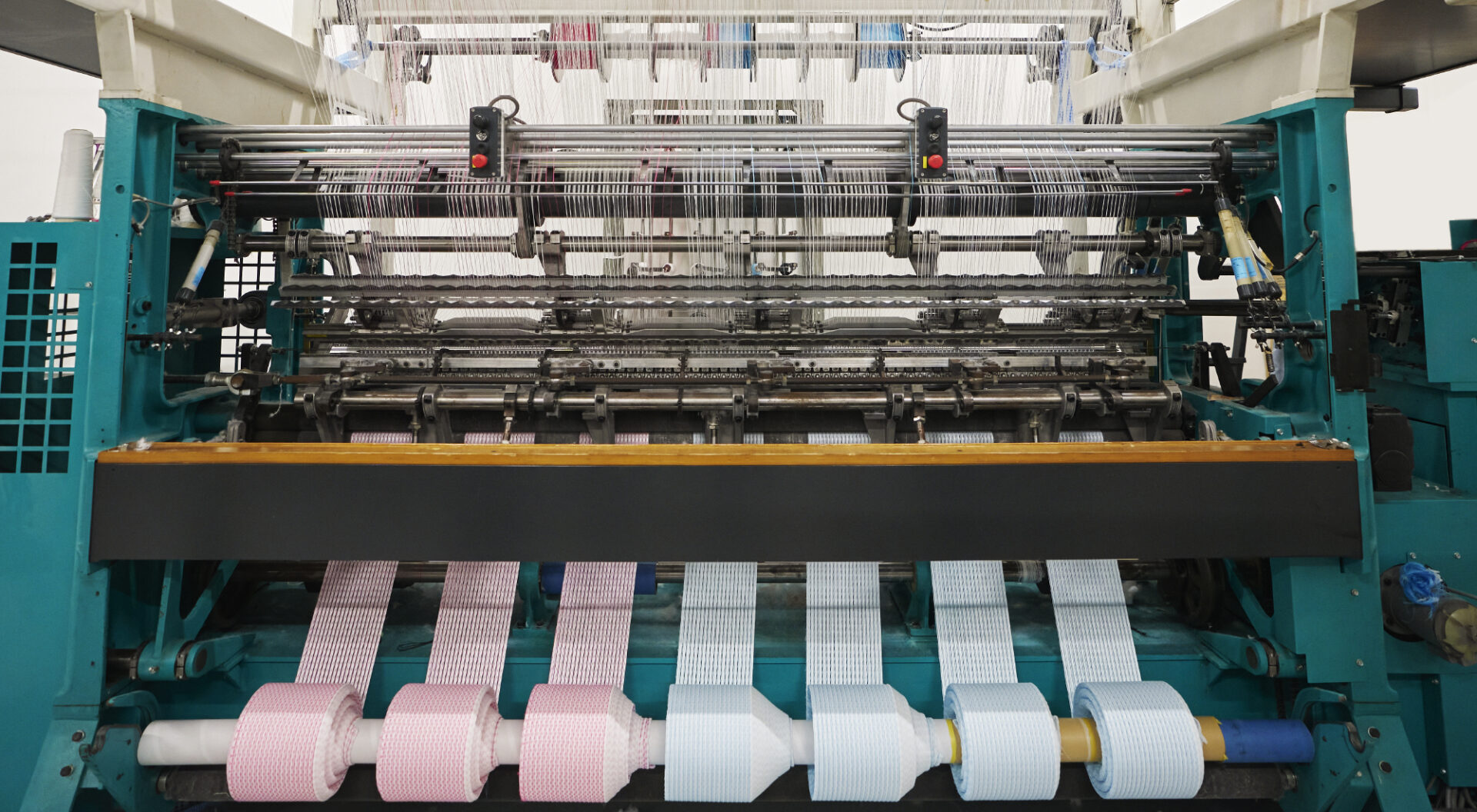
The weave is where a body towel becomes a body towel. On the loom, warp and weft are built into the raised, three-dimensional structure — waffle, mesh, crepe or ribbed — that traps air and water and whips a small amount of soap into a dense, cushioning foam, while giving the surface its exfoliating bite. By adjusting how tight or open the weave is, combining fibres, or adding stripes and jacquard patterns, we can tune the very same towel from a gentle daily glow to a firm Japanese scrub. Holding that texture consistent across an entire production roll is what separates a manufacturer from a workshop.
03Dyeing and colour
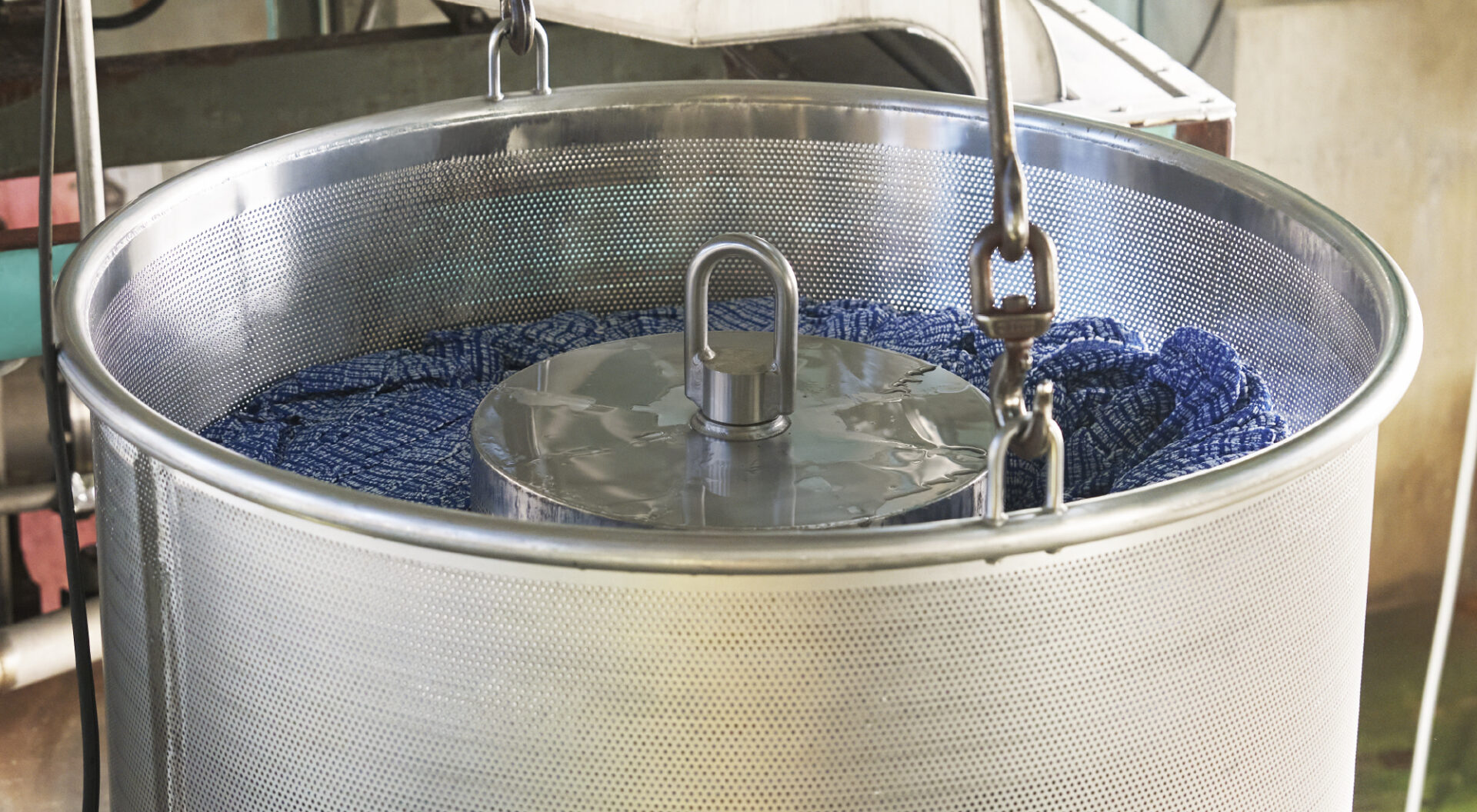
The woven webbing is dyed to your brand’s colour standard. Because a body towel is used wet and daily, colour-fastness is part of the specification, not an afterthought — we control it so colours neither bleed nor fade prematurely. For skin-contact products we can finish without fluorescent brighteners and align to the safety expectations of your destination market.
04Heat-cutting to length
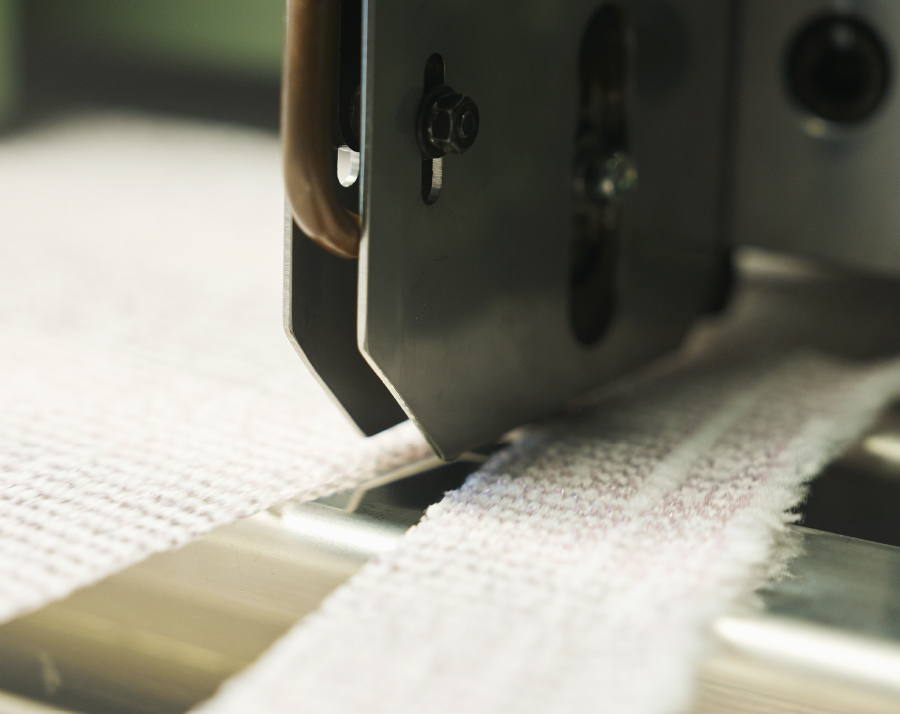
Synthetic body-towel webbing is heat-cut rather than scissor-cut. The heated blade seals each edge as it divides the web, so the finished towel will not fray or unravel through years of wet use. This step also sets the finished length — a compact face size, a standard size, or the long back-washing format that is popular in Japan — exactly to your specification.
05Sewing, finishing and inspection
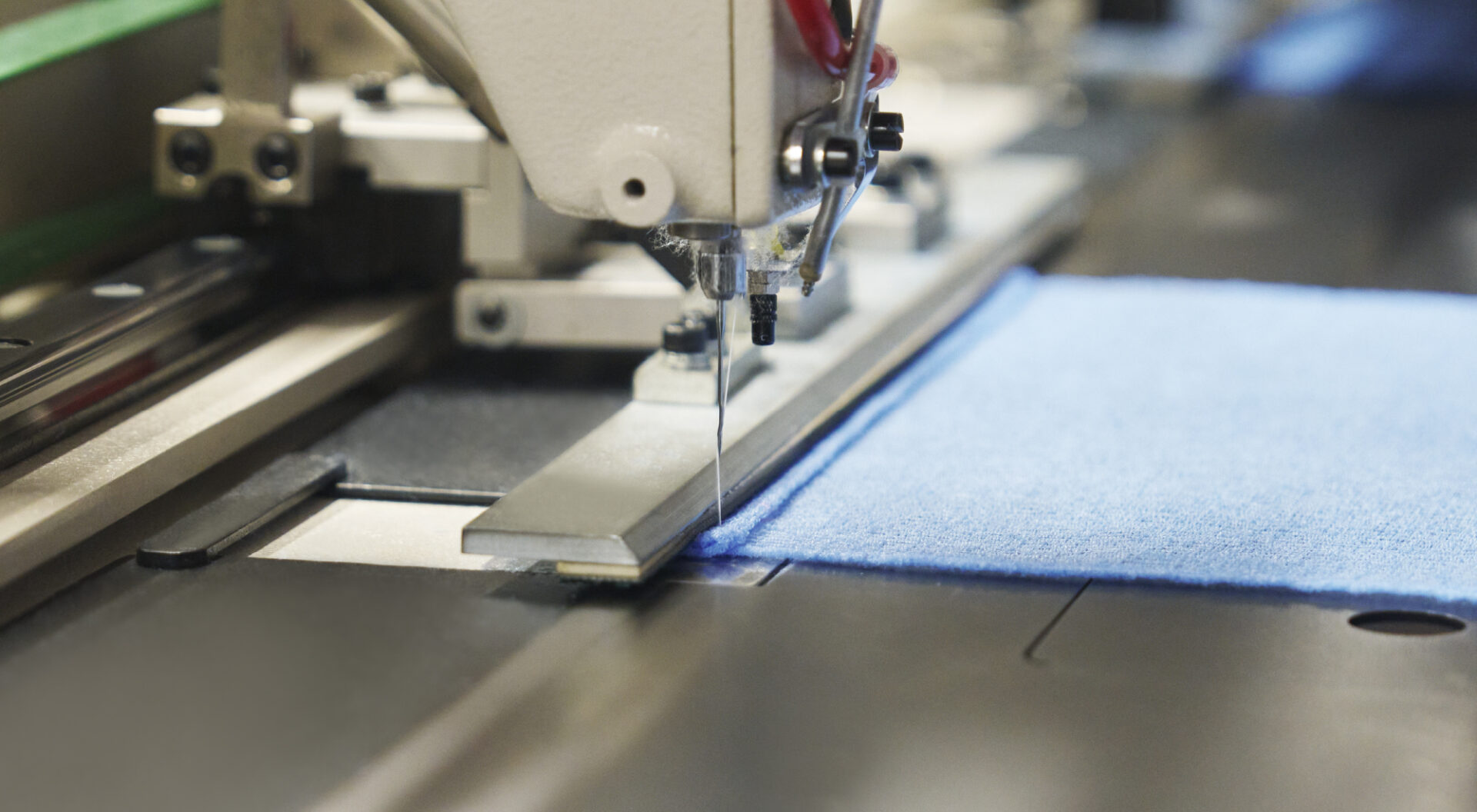
Hems, hanging loops, joined ends and any sewn-in labels are added here, turning a cut length of fabric into a retail-ready product. Every batch then passes our in-house quality protocol before packing: dimensions, stitching, colour and finish are all checked against the approved sample. The same care extends to packaging — sleeve, header card or printed box — so the product arrives ready for your shelf.
Textures and materials we engineer
One construction does not fit every market. These are the building blocks we combine to hit a target feel:
- Nylon and synthetic mesh — the classic deep-exfoliating Japanese towel; strong lather and fast drying.
- Soft nylon and blends — everyday exfoliation with a gentler hand for daily-use lines.
- Cellulose and bamboo rayon — soft, plant-derived and biodegradable options for natural ranges.
- PVA — a smooth, highly water-holding material that is kind to delicate skin.
- Konjac and sericin (silk-protein) — skincare-led, gentle variants for sensitive and premium lines.
- Custom mesh and jacquard — distinctive textures and woven-in branded patterns.
Tell us the outcome you want — exfoliation level, lather, drying speed, skin sensitivity — and we develop the construction to match, then prove it on a physical sample before any bulk run. Additional finishes, such as antibacterial treatment, can be specified where your line calls for it.
OEM and private label: two routes, one factory
There are two ways to work with us, and both run through the same factory. With OEM, you bring the specification — material, weave and texture, size, colour, fragrance where applicable, and packaging — and we engineer and produce it. With private label, we adapt proven, market-tested Aisen products to your brand and packaging, which is the faster route to shelf. Either way, the full bath-and-home range comes from a single supplier: body towels, konjac sponges, kitchen and cleaning sponges, bath mitts, brushes and urushi hairbrushes. Our Japanese body towel & bath goods OEM overview sets out the wider product range.
How we work: MOQ, lead time and terms
You do not need a full container to begin. Stock items ship from a single LCL case and scale to full 40FT containers as your program grows, while custom-printed body-towel packaging starts at 6,000 pieces per design. Our partnership follows five clear steps — Inquiry, Sample, Develop, Produce, Ship — and production lead time is typically about one month after sample approval, depending on volume and customization. We quote on FOB Japan or CIF terms with full export documentation, and you can read the complete wholesale and OEM terms before you commit. We reply within two business days in English, Japanese, Chinese or Korean.
Quality, safety and sustainability
Every batch passes our in-house quality protocol. On request we provide product test reports, standard and preferential (EPA / FTA) Certificates of Origin, and other export or compliance documentation to support your destination market. For products held against the skin, we choose materials and finishing accordingly. And where they suit your design, we offer biomass-labelled and plant-derived fibres, recyclable packaging and partially plant-based inks — so a sustainability story can be built into the product rather than added on.
Develop your body towel with a Japanese maker
Tell us your product, target market and volumes, and we will recommend a construction and prepare a sample. We reply within two business days in English, Japanese, Chinese or Korean.
Request a wholesale quote → · See the OEM range overview · Explore the collections · Read our story.
Frequently asked questions
How is a Japanese body towel manufactured?
In five controlled steps: material and yarn selection, weaving the texture on a loom, dyeing to colour, heat-cutting to length with sealed edges, and sewing and finishing — followed by in-house inspection of every batch against the approved sample.
Can you match a specific texture or exfoliation level?
Yes. By changing the fibre, yarn and weave we can tune a towel from a gentle daily glow to a firm Japanese scrub, and we develop to a physical target sample before any bulk production.
Which materials can you produce body towels in?
Nylon and synthetic mesh, cellulose, bamboo rayon, PVA, polyurethane, natural fibre, and konjac or sericin (silk-protein) finishes, including biomass-labelled and plant-derived options.
What is the minimum order for an OEM body towel?
Stock items ship from a single LCL case; custom-printed packaging starts at 6,000 pieces per design, and programs scale to full containers.
Do you provide test reports and Certificates of Origin?
Yes — product test reports and standard or preferential (EPA / FTA) Certificates of Origin are available on request, along with other export documentation.