
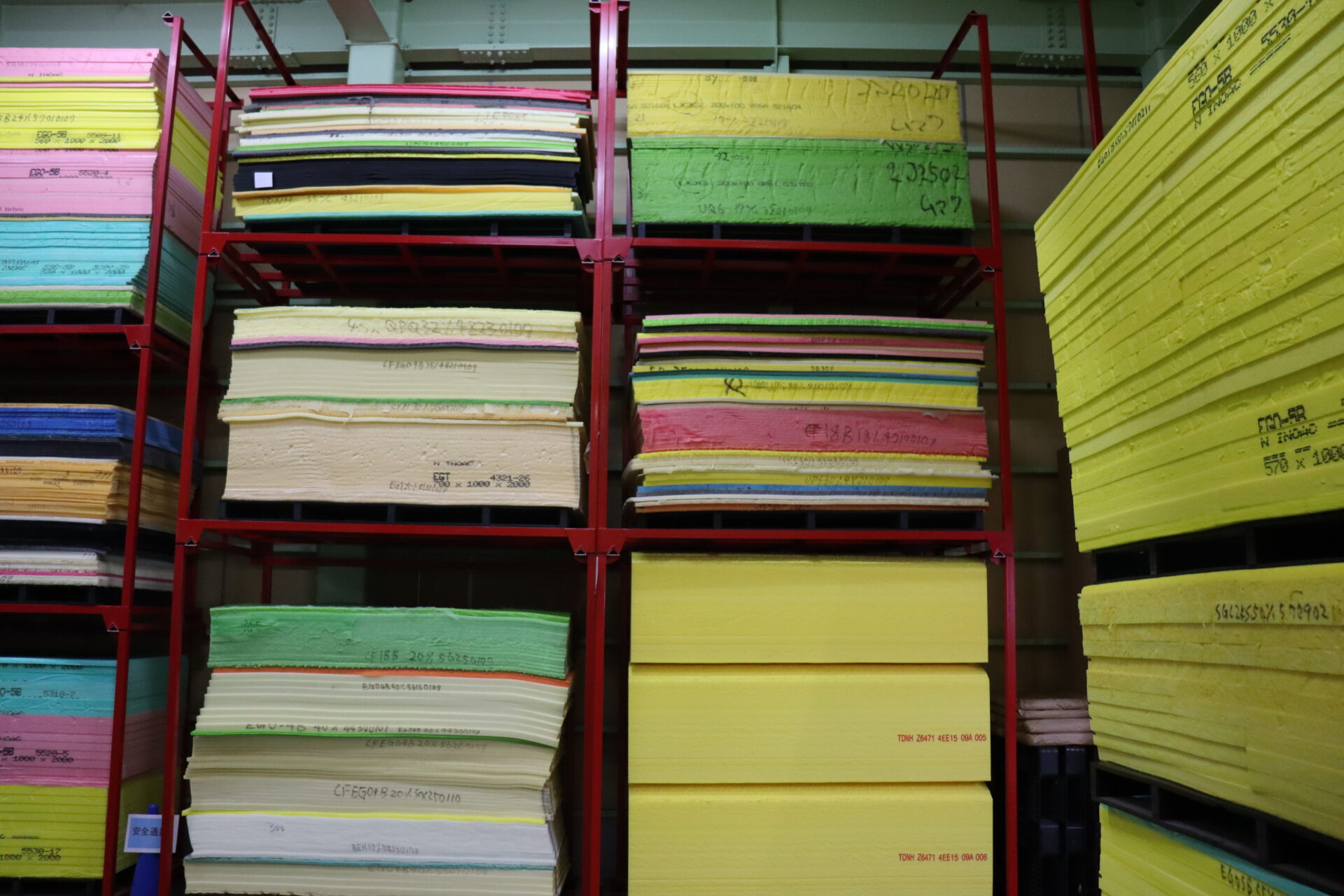
Storage Racks
Colour-coded racks hold urethane foam in every size and density, keeping high-mix inventory organised and traceable.


MANUFACTURING
Behind every product, four decades of quiet refinement —
and the hands that have shaped them.
01. PHILOSOPHY
For four decades we have made household goods in Wakayama — pairing precise machinery with the judgment of experienced hands. These are the principles behind every block of foam we cut, emboss, and finish.
01 / FOUR PRINCIPLES
Before any product takes shape, we begin with the material itself. Cellulose, bamboo, urethane, plant fibers — each block is sorted by size and density and sourced for both performance and care for the world it came from. The right material makes everything that follows simpler.
02
Machines cut, press, and pack — but the judgment of the hand decides whether a sponge is right. Our craftspeople laminate, align, and inspect every batch against forty years of accumulated knowledge. Some things only a person can know.
03
We have built this workshop one decade at a time, and we are not in a hurry. Each sheet is cut, embossed, and finished with care — a thousand small decisions, repeated until they become invisible, leaving only the quality behind.
02. THE PROCESS
Nine in-house processes, under one roof in Wakayama — from raw block to finished, packaged sponge.
Urethane foam blocks are sorted by size and density on colour-coded racks, ready for production.
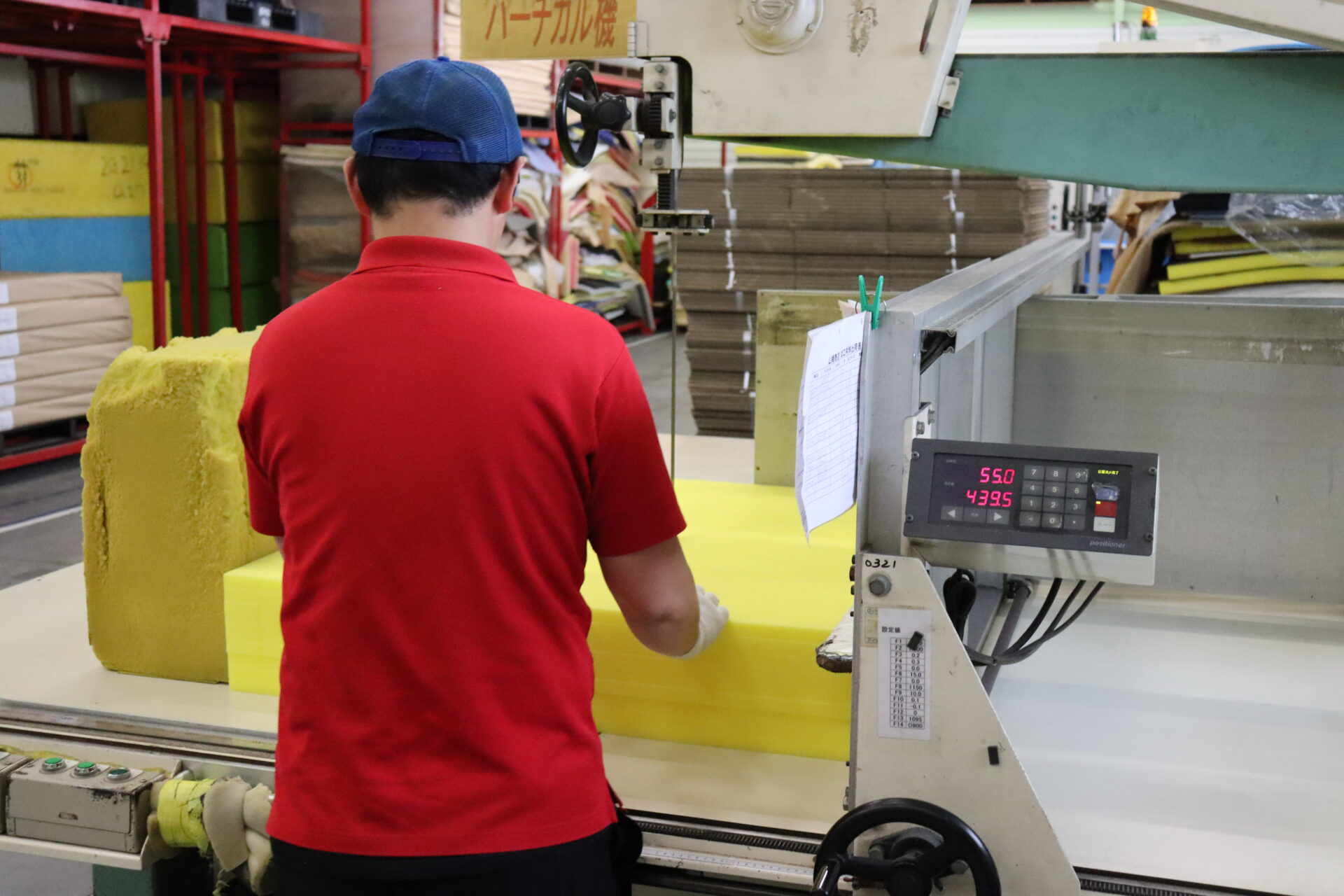
Vertical cutters and slicing tables trim blocks to precise heights and thin sheets.
Rollers press anti-slip textures and patterns into the foam surface for grip and feel.
Skilled technicians align and bond sponge with non-woven fabrics into clean multi-layer structures.
Heat and controlled pressure cure each bond, while hydraulic presses tune the final density.
Thomson dies punch finished shapes, then an automated line wraps each piece in protective film.
03. EQUIPMENT
A full suite of in-house equipment lets us handle every stage of production under one roof — from raw-material storage and cutting to lamination, pressing, and final packaging.
Colour-coded racks hold urethane foam in every size and density, keeping high-mix inventory organised and traceable.
A high-speed vertical blade slices foam blocks to precise heights for smooth, uniform production.
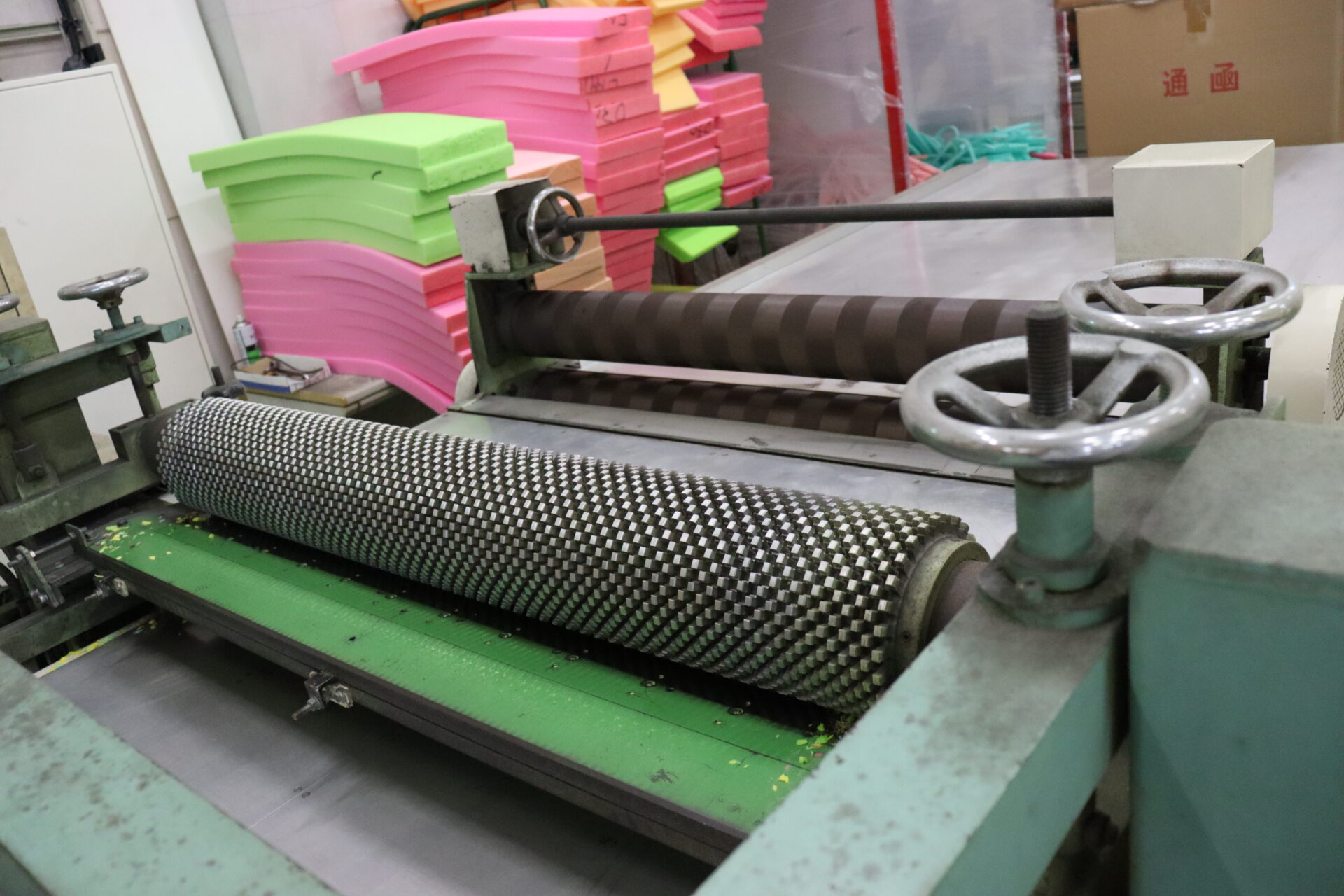
Patterns are embossed onto the foam surface to add grip and refine the feel in the hand.
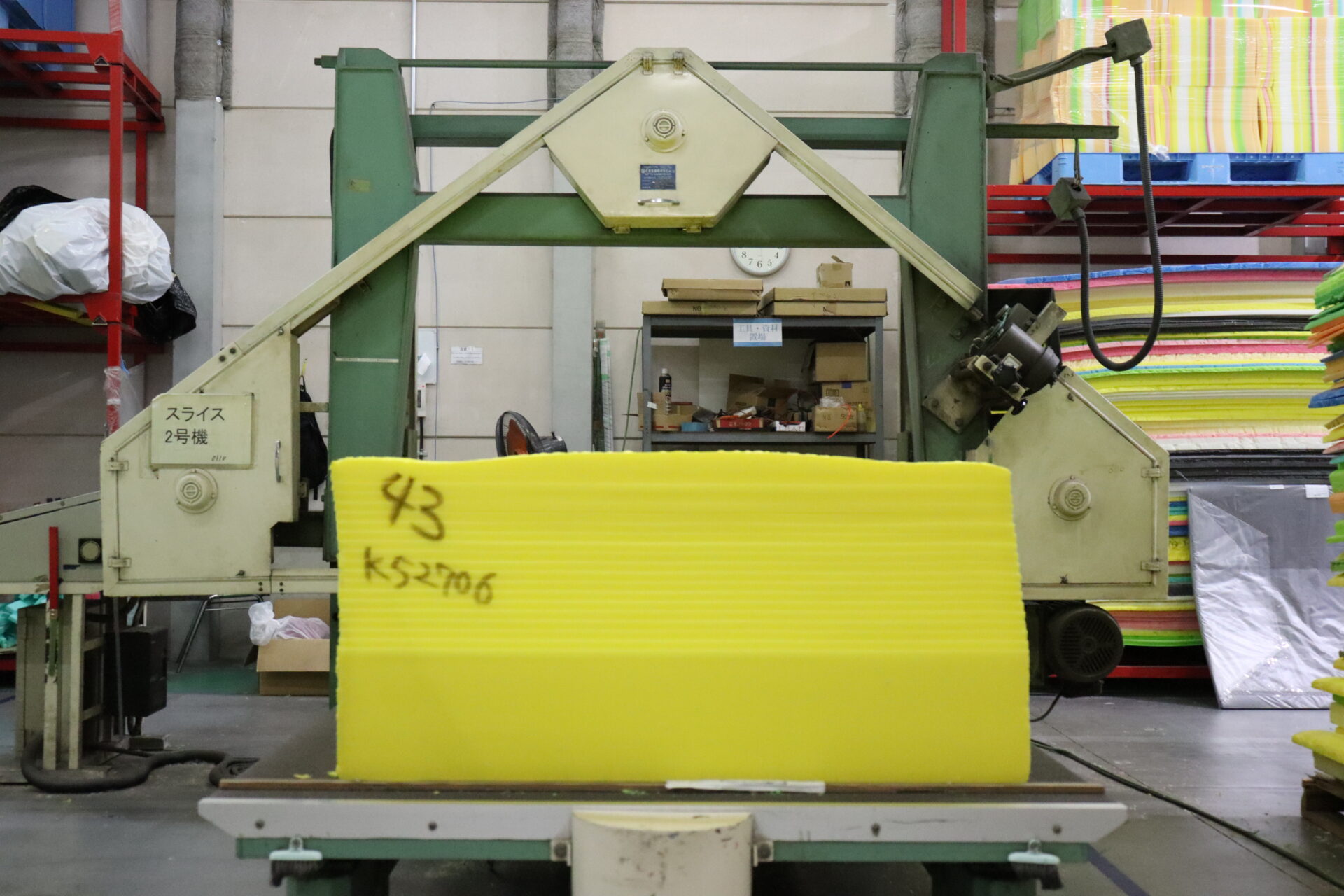
Table-style slicers cut blocks into thin sheets at custom thicknesses, maximising yield and reducing waste.
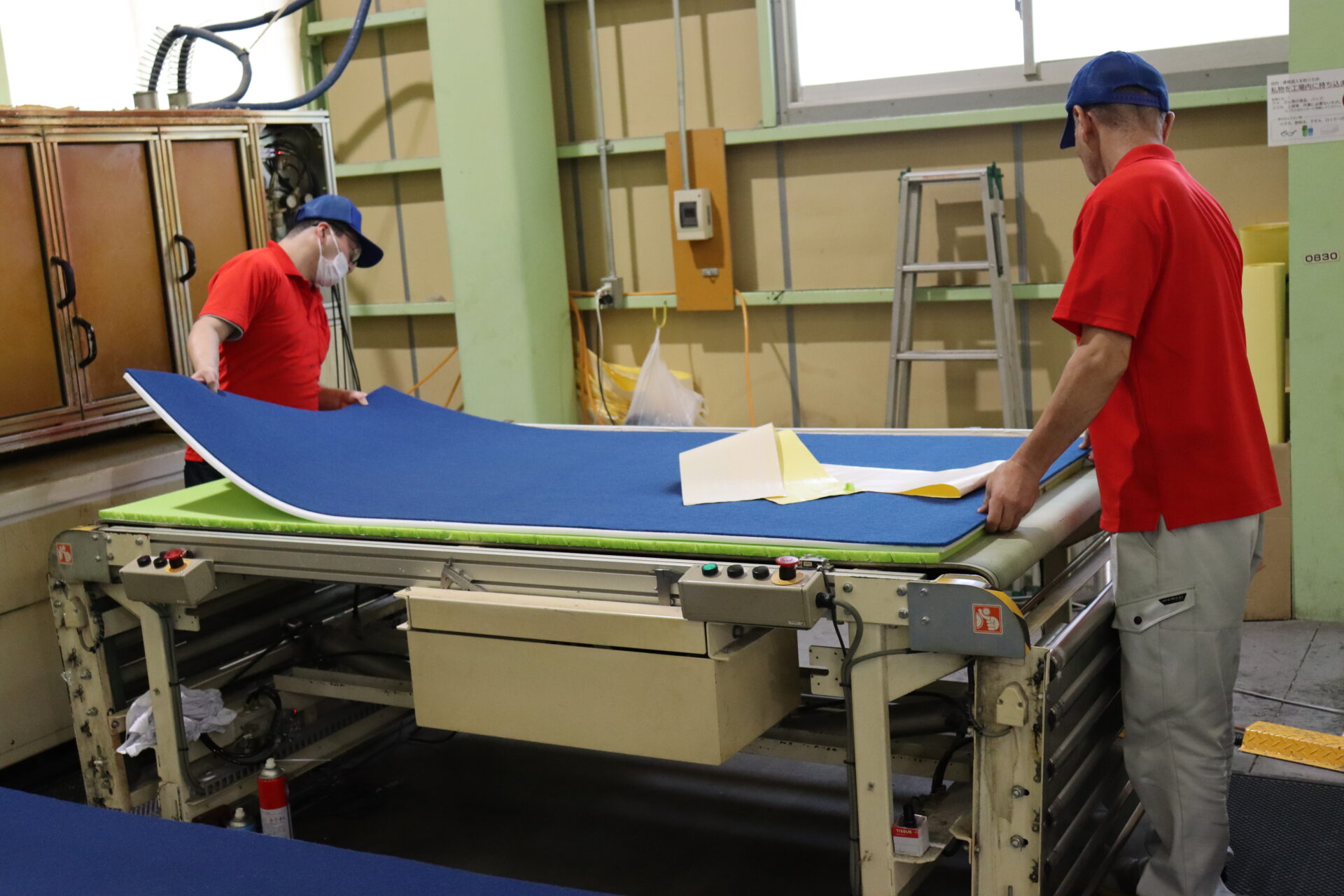
Experienced artisans align and bond sponges with non-woven fabrics for clean, complex multi-layer structures.
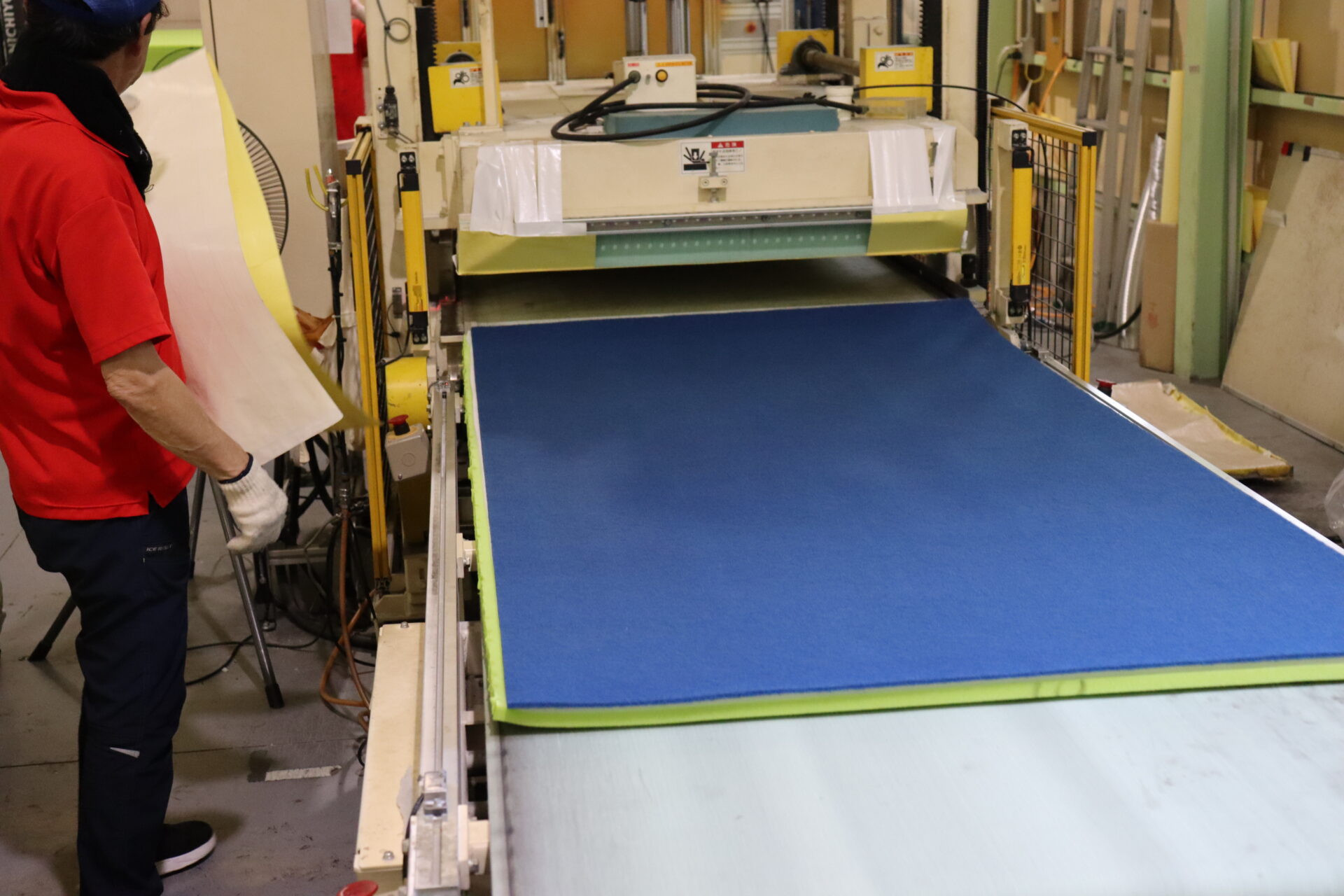
Layers are pressed under controlled heat and pressure to create durable, long-lasting bonds.
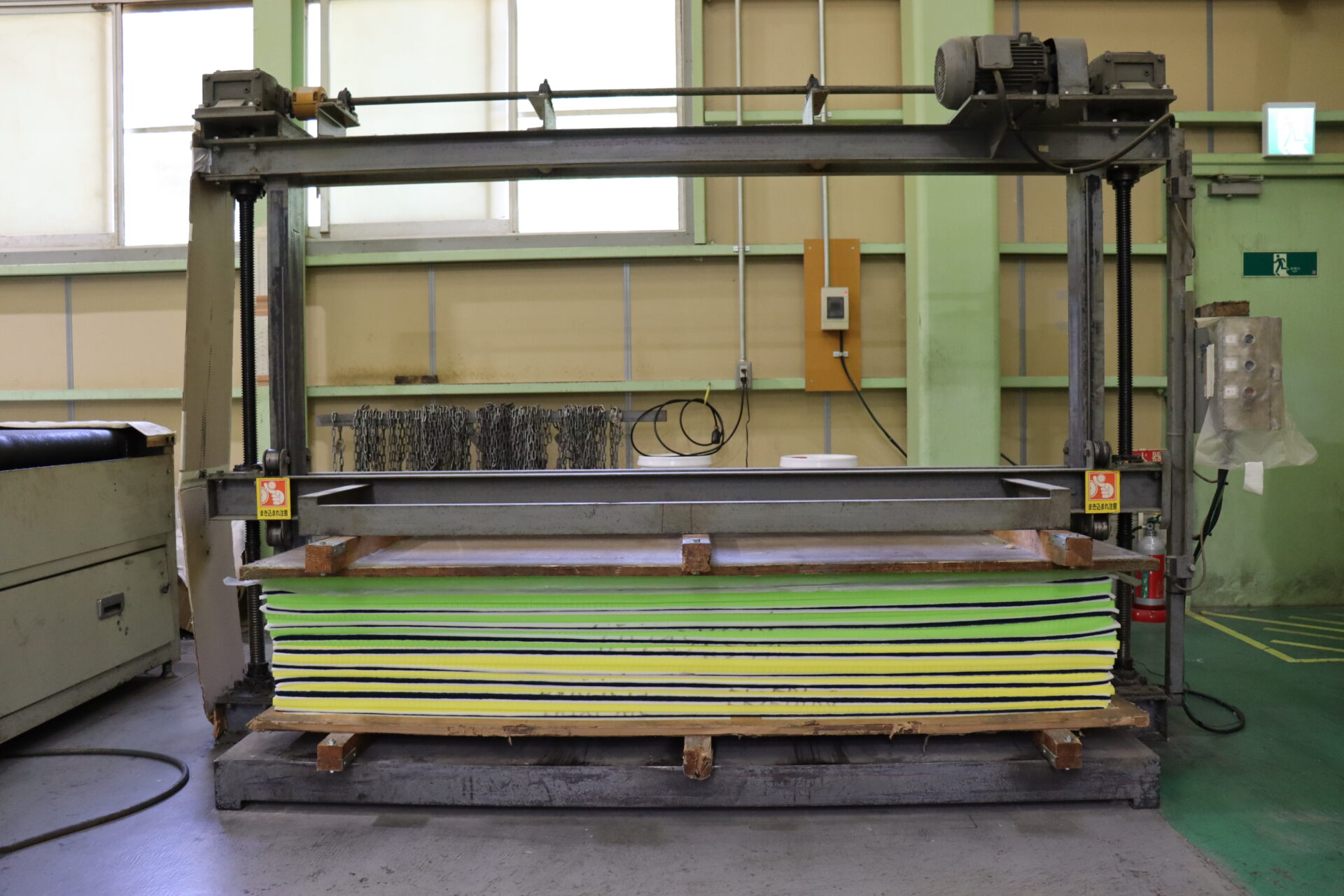
Automated presses compress sponges uniformly to adjust density and prepare them for finishing.
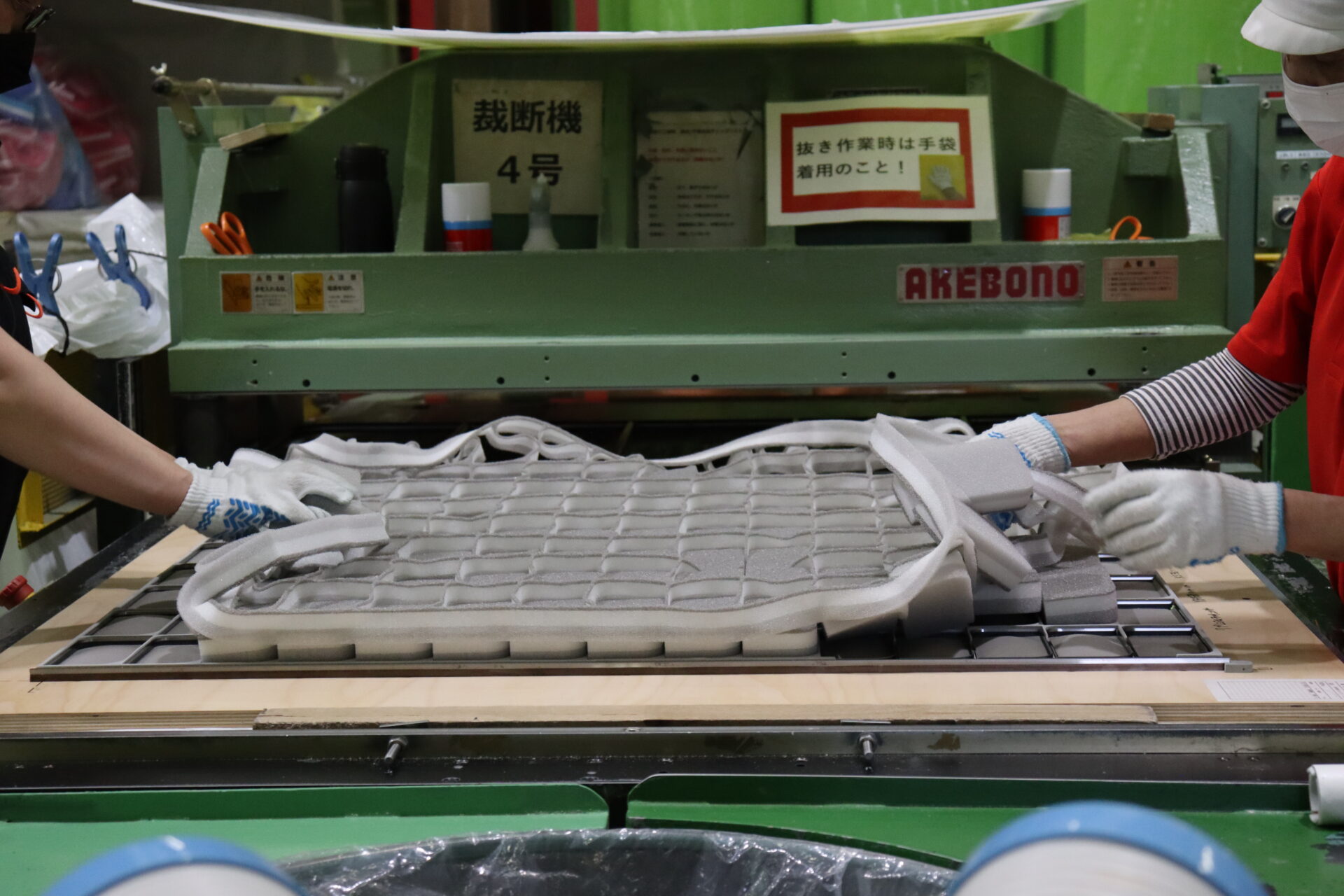
Thomson die-cutters punch intricate, repeatable shapes for custom designs and precision parts.
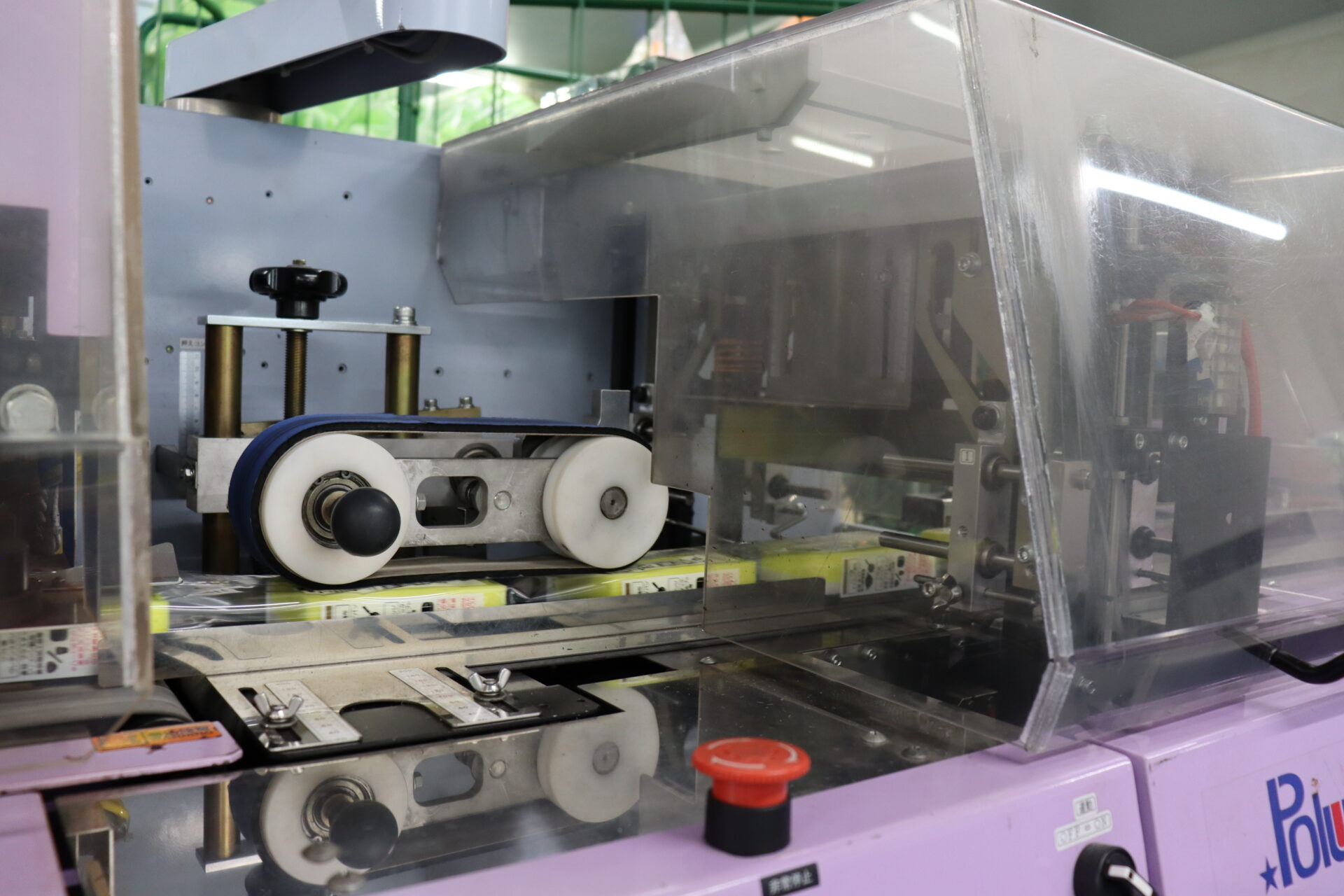
Finished goods are wrapped in protective PP or PVC film, ready for custom branding and export.
04. ORIGIN
A coastal city in southern Japan — the home of our workshop, our team, and every product that bears our name. Geography, in our case, is part of the craft.
Umikongo, Kushimoto — the Pacific coast of Wakayama. Photo: 663highland / CC BY 2.5
From a single case to a full container, we make household goods to your exact specification — designed, finished, and packed in Japan.
+81-734-87-4345 · WhatsApp · LINE · WeChat