



Executive Summary
In the personal care market, the choice of body towel material is crucial for both skin health and environmental sustainability.
For decades, synthetic fibers like nylon and polyester have dominated the market due to their low cost and durability. However, recent data highlights significant issues with these materials, including skin damage caused by friction and environmental pollution from microplastics.
This report explores Konjac Glucomannan (KGM), a plant-based material derived from the Konjac potato, as a superior alternative. Unlike synthetic fibers that clean by “scraping” the skin, Konjac sponges clean through “hydration lubrication”—creating a water barrier that allows the sponge to glide over the skin.
This results in a texture that is scientifically softer and safer for sensitive skin, while also being 100% biodegradable.
1. The Science of Softness: Hydrogel vs. Plastic Fibers
To understand why Konjac feels so different from nylon, we must look at the structure of the materials.
1.1 From Fibers to Hydrogel
Synthetic towels (nylon/polyester) are made of hard, plastic threads woven together. Even when wet, these fibers remain solid and relatively hard.
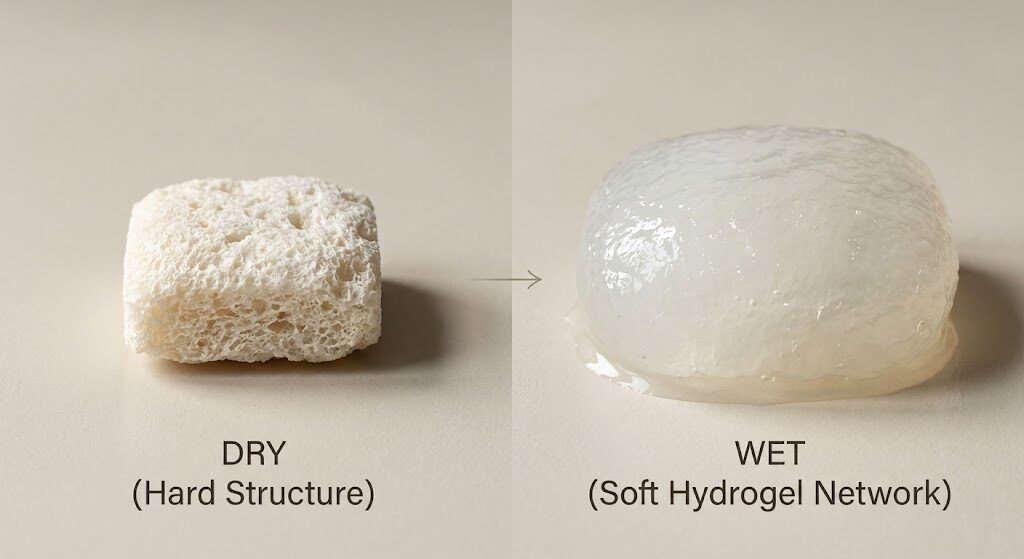
In contrast, a Konjac sponge is made of Konjac Glucomannan (KGM), a natural fiber that acts as a “hydrogel.”
When dry, it is hard, but when soaked in water, it absorbs up to 50-100 times its own weight in liquid. This transforms the structure into a soft, elastic network that holds water not just inside the holes, but within the material itself.
1.2 The Water Film Mechanism
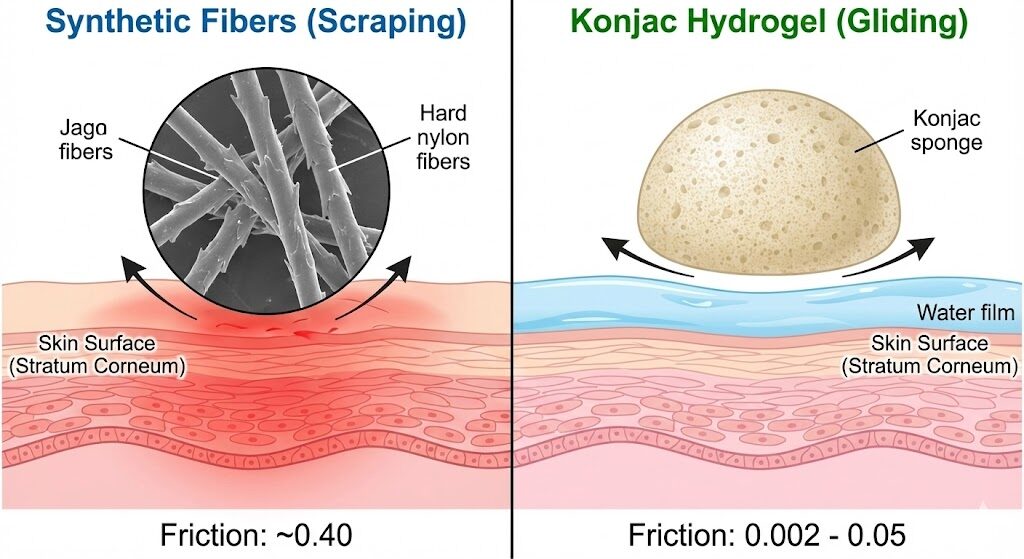
The key to Konjac’s softness is Hydration Lubrication. When you use a Konjac sponge, a layer of water forms between the sponge and your skin.
・Synthetic Towels: The fibers rub directly against the skin, creating friction.
・Konjac Sponges: The sponge glides on a thin film of water. This phenomenon reduces the friction coefficient (a measure of how slippery something is) to incredibly low levels—around 0.002 to 0.05.
・Comparison: Nylon towels have a friction coefficient of roughly 0.40, which increases when wet because the fabric sticks to the skin.4 This means nylon generates nearly 100 times more friction than Konjac.
2. Impact on Skin Health
The difference in friction isn’t just about feeling good; it has serious implications for dermatology.
2.1 Preventing Friction Melanosis
One of the documented risks of using nylon towels is Friction Melanosis, sometimes called “Nylon Towel Dermatitis.” This is a condition where chronic rubbing with hard materials causes inflammation and dark pigmentation (dark spots) on the skin.5
Because Konjac sponges have such low friction, they do not trigger this inflammatory response. The material acts as a cushion, distributing pressure evenly rather than focusing it on rough fibers.
2.2 Protecting the Skin Barrier (Eczema and Sensitive Skin)
For people with Atopic Dermatitis (Eczema) or sensitive skin, preserving the “skin barrier” (the outer layer of oil and moisture) is vital. Scrubbing with synthetic towels can strip away this barrier, leading to dryness and irritation.
Dermatologists often recommend avoiding abrasive mechanical exfoliation. However, Konjac sponges offer a safe middle ground. Because they are slightly alkaline (pH 8.4), they can neutralize acidic dirt and oil without the need for harsh scrubbing or strong soaps.7 This makes them an ideal tool for gently cleaning compromised skin without causing damage.

3. Sustainability: A Plastic-Free Solution
Beyond personal health, the environmental argument for Konjac is compelling for modern consumers and businesses.
3.1 The Microplastic Problem
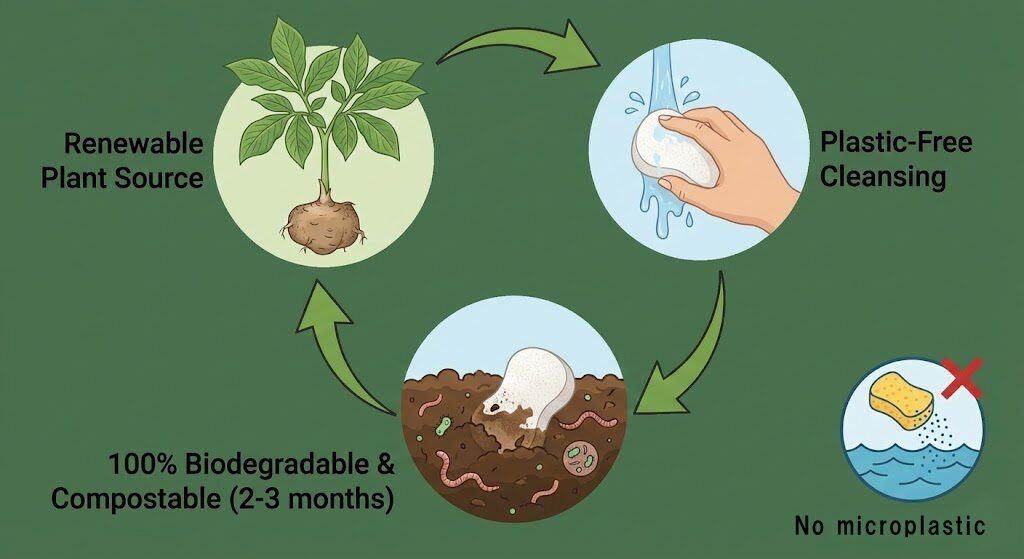
Synthetic sponges and towels shed tiny plastic particles (microplastics) every time they are used. Recent studies suggest that as these products wear down, they release millions of microplastic fibers into the water system, which eventually reach the ocean.
3.2 Fully Biodegradable
Konjac sponges are 100% plant-based.
Compostable: When buried in soil, a Konjac sponge will break down by 90% within 2-3 months.12
Renewable: They are made from a renewable crop, not petrochemicals.
Conclusion for this Article
For professionals in the beauty and wellness industry, the Konjac Body Towel represents a shift from “cleaning by force” to “cleaning by science.”
・Superior Softness: Achieved through hydration lubrication, not just soft threads.
・Clinical Safety: drastically reduces the risk of friction-induced skin damage.
・True Sustainability: A zero-waste alternative to synthetic plastics.
By focusing on these scientific advantages, we can position Konjac not just as a traditional tool, but as a high-performance material for the future of skincare.
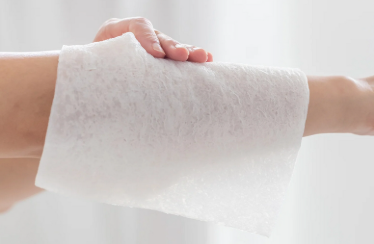
From Japan to Your Daily Routine
The Tsuyano-ko konjac Body Towel isn’t just a bath accessory — it’s a piece of Japanese culture.
BThe Tsuyanoko Konjac Body Towel is more than a bath item — it carries the heritage of Taka, Hyogo, where the ancient art of frozen konjac was born.
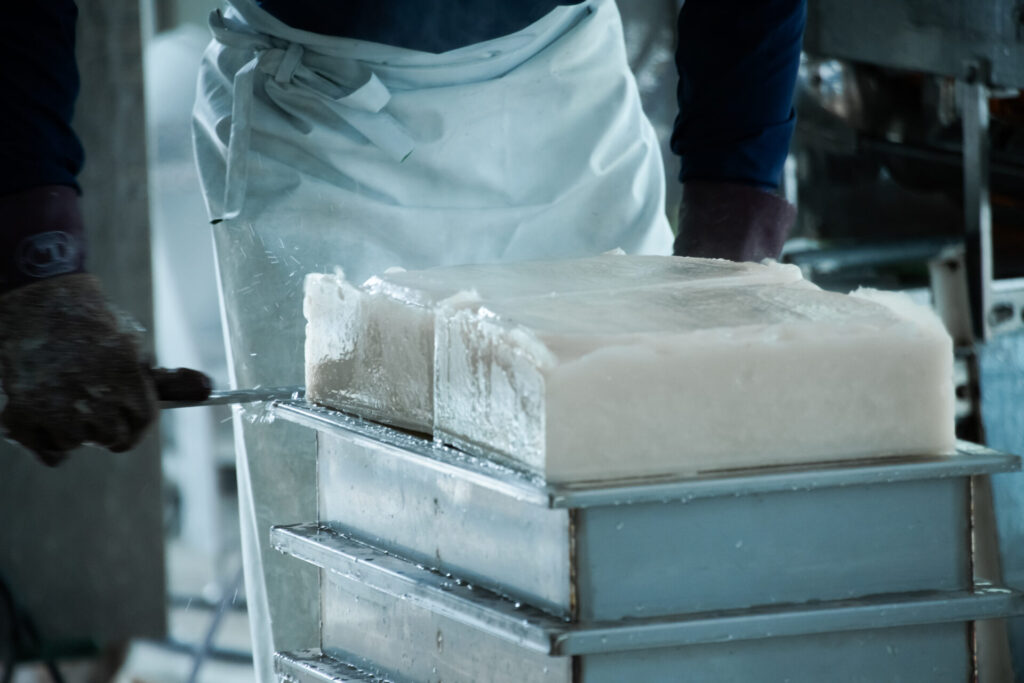
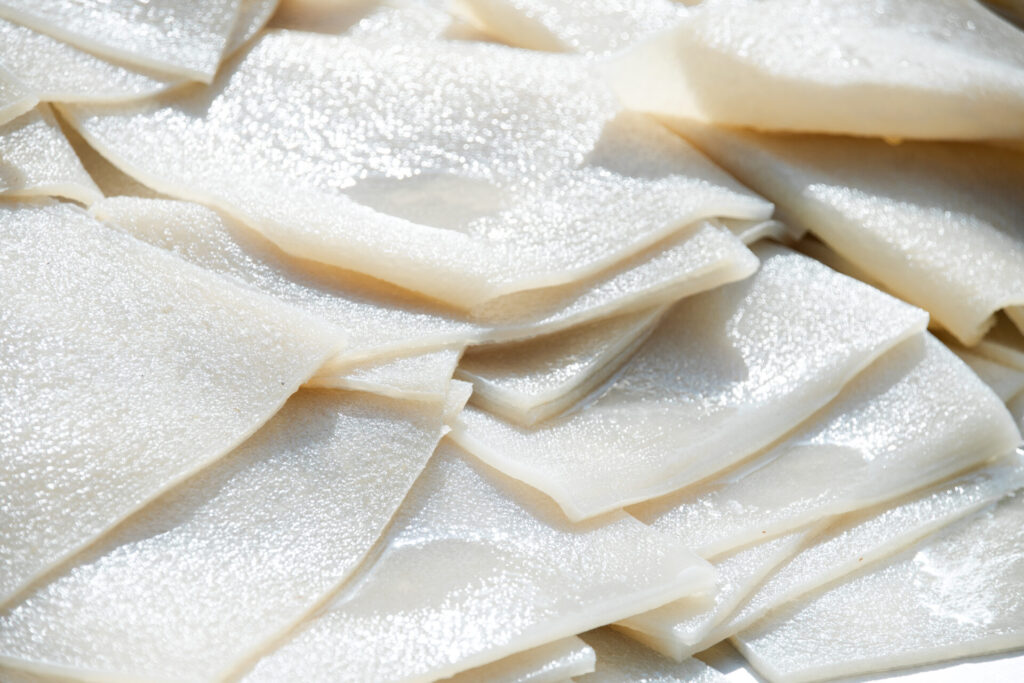
This traditional technique, developed over a century ago, involves naturally freezing and drying konjac root to create a soft, porous texture — the same wisdom now used to craft this gentle, plant-based towel.
Handmade by SUNAO, a long-standing Japanese workshop, each towel embodies generations of craftsmanship.
Today, fifth-generation artisan Naotsugu Fujiwara continues this legacy with the belief that “the beauty of konjac belongs to the world.” From frozen konjac to modern skincare, Japan’s ingenuity lives in every fiber.


Key Features
Material: 100% plant-derived konjac fiber
Feel: ultra-fine texture; gentle, low-friction cleansing
Origin & method: traditional frozen-konjac technique handed down in Hyogo for over a century
Typical size: approx. 22cm × 17cm (towel body)
Use cases: daily body wash, self-care gifts, spa & boutique retail
Call for U.S. & European Distributors/Retailers
We are now welcoming distribution and retail partners in the United States and across Europe. For dealership inquiries, pricing, and retail programs, please reach out.
Why We Chose to Carry Tsuyano-ko
Aisen’s mission is to share Japanese craftsmanship with the world. “Tsuyano-ko” aligns perfectly with our standards: plant-based materials, proven traditional manufacturing from Hyogo, and a distinctive sensory experience that modern consumers love. This authenticity, coupled with our global operations, makes it a natural fit for our portfolio.